
Use the Search magnifying glass above to search the site. Use CNTL+F to find text on pages; Apple, use Command+F.
The Human Body & Our Electrical Relationship With Planet Earth

COHERENCE, Vol 1, Issue 4 , January, 2023, by Stephen Elliott, Life Scientist, COHERENCE
Undergoing evolution. Last revised on August 12th, 2023.
Preface: This article explores the apparent attraction in connectivity between the human body and Earth ground. Exploration of this topic by this author began in 2004, resulting in the filing of US Patent 7349194 in 2005, Method And System For Electrically Connecting The Human Organism (And Vertebrate) Organism To Earth So As To Facilitate A Current Flow Between The Human Biopotential And Earth For The Purpose Of Promoting Health, Well Being, and Performance. The research behind the patent application demonstrated that the human body desires connectivity with Earth between a range of resistances, where current flow is maximized when resistance between the body and Earth is less than 500 Ohms, but is negated rapidly when resistance values rise above this value. Further investigation of the meaning and significance of the phenomenon was not undertaken until the writing of this article, which began in 4Q2022.
The present hypothesis regarding the phenomenon being observed is that we are measuring electron flow from Earth to the body, and that this electron flow is a consequence of metabolic status, where these electrons are being conscripted by the electron transport chain of the mitochondria associated with “cellular respiration”.
There are a couple of significant matters that arise, right or wrong yet to be determined: 1) It is generally considered that the human body receives all of the electrons it requires for cellular respiration via dietary and respiratory intake. If this is true, why does the body appear to want to maximize the flow of electrons from Earth given the chance? Here, my hypothesis is that electrons external to the body with <500 ohms reach require less work to recruit than electrons available internally.
A 2nd major question is, if when the body is connected electrically to a ground rod, we have hundreds of trillions of electrons per second flowing from Earth into the body in what is primarily a DC current, there must exist a circuit by which electrons return to Earth. Where is it? The only obvious answer is that we expel electrons into the atmosphere with each exhalation of breath, which would necessitate that we also inhale electrons with each breath, which is already assumed.
~
As introduction, I am a proponent of “grounding”. I sleep grounded, and at work in my home office I am grounded. I have been interested in this topic for much of my life, it always making sense to me that before modern times, we were all grounded, during sleep, rest, activity. This because we were sleeping, walking, sitting on the ground, the Earth’s surface. Whereas today, our modern lifestyles have us electrically insulated from Earth, via the materials of our shoes, our clothing, our homes, our furniture, and our activities, where human agriculture, working the Earth with our hands and bodies used to be necessary to sustain our lives. So, we were in constant contact with the Earth’s surface, be it soil, water, plant life…
It is generally understood that the human race populated the planet by walking the ocean’s shorelines, from central Africa, to the shorelines of the farthest reaches of the world, parts of the planet that are now separated by ocean, e.g. the Bering Straight, the waters separating Australia from mainland Asia. Humankind reached every corner of the world by this endless quest. The import of this is that people were moving and living next to the sea, a highly conductive saline environment, damp rock, sand, earth, water, all highly conductive relative to humankind’s electrical connectivity with the Earth. The sea is in effect “liquid ground”.
By and large, this was the best place to be because both food and fresh water were plentiful, freshwater streams and rivers emptying into the ocean, fish and predator swimming upstream to capture their prey.
A question that has been in the back of my mind for many years is whether we need connectivity with Earth in order to “function naturally”? Wild animals live outside, exposed to the elements, either standing on Earth, dwelling in the branches, or residing in the water, somehow managing to survive harsh conditions, hot or cold, wet or dry. This includes humankind’s ancient ancestors that have had an evolutionary trajectory of their own. How do they do it?
The question is: “Do we as “civilized” humans require connectedness to Earth?” Does the human organism desire it, from a homeostatic point of view? Of course, a larger question is: “Is there communication going on between people and the planet?” (The same question of other life forms…?)
Clinton Ober’s book: Earthing: The Most Important Health Discovery Ever!, copyright 2014 (1), considers many of the same ideas. However, I am not aware of anyone employing this approach to understanding it.
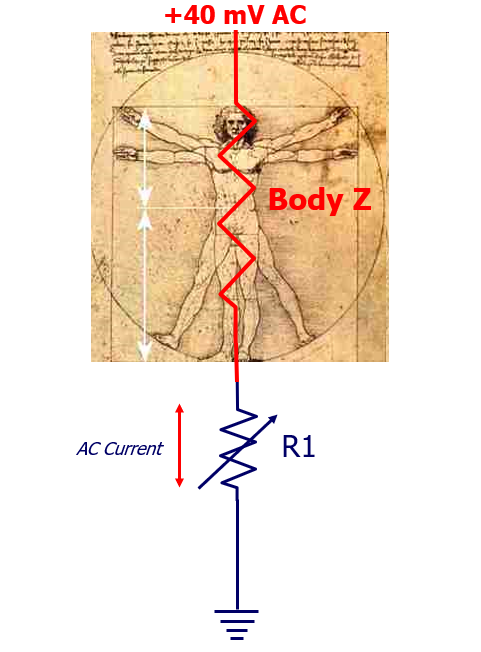
Figure 1: The Measurement Concept
To explore this question, I set about to see how the human body responds to “connectivity” with ground”. To start, I measured the AC voltage produced by the human body, which measures ~+40mVAC; +.040 volts, “alternating current” to ground. (The instrument, an Agilent 3458A, has a 1M Ohm input impedance so it is capable of measuring very small signals without loading them down, i.e., without consequent change in value.) Note that the potential is positive relative to ground.
My objective here is to assess “AC current”, but because the signals are very small, I could not place a current meter directly in-line with the human body and realize any meaningful readings. On the other hand, because the instrument I am using is capable of measuring very small voltages, I am able to assess AC voltage across resistor R1, a resistor decade box, and from there use Ohm’s Law to determine AC current. I am specifically interested in “AC” activity because I am fascinated with the potential for communication.
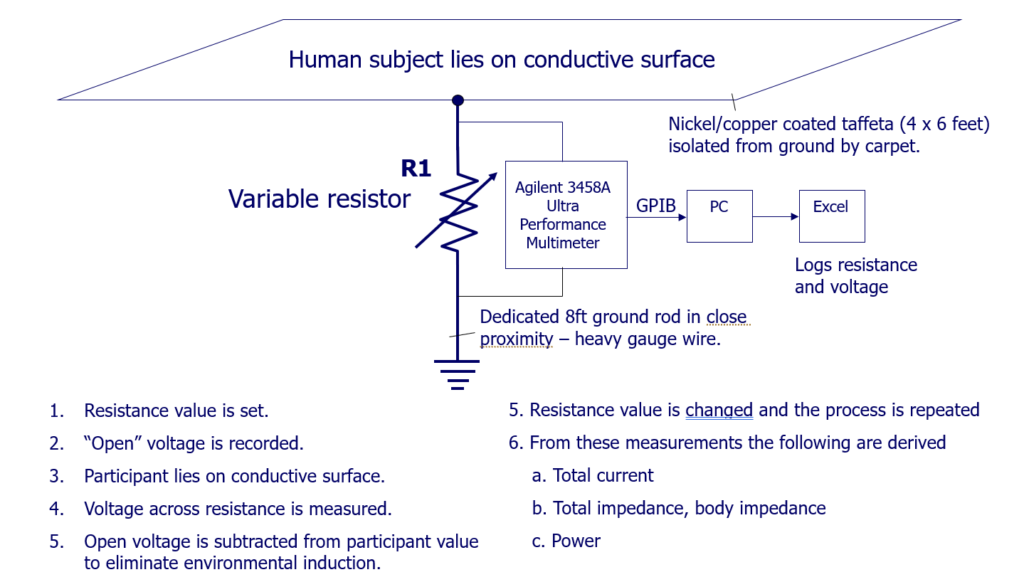
Figure 2: The Measurement System
The measurement system is depicted in Figure 2, where two measurements are required per resistance value, the first set of measurements taken without a person lying on the conductive surface, a 4 x 6 piece of copper/nickel coated taffeta, insulated from ground via carpet. The second set of measurements are taken with a human subject lying on the surface, without clothing, i.e., maximizing contact between the body and the fabric.
The first set of measurements are then subtracted from the second, the intention being to eliminate any environmentally induced “noise”.
One can see that having the “source” voltage of a human subject, a known value of resistor R1, and the calculated current flowing through R1, we are able to know if human body impedance is changing as a consequence of the resistor value, i.e. “connectedness” to Earth. This is tantamount to asking: “Does the human body have a characteristic impedance?” If so, what is it?
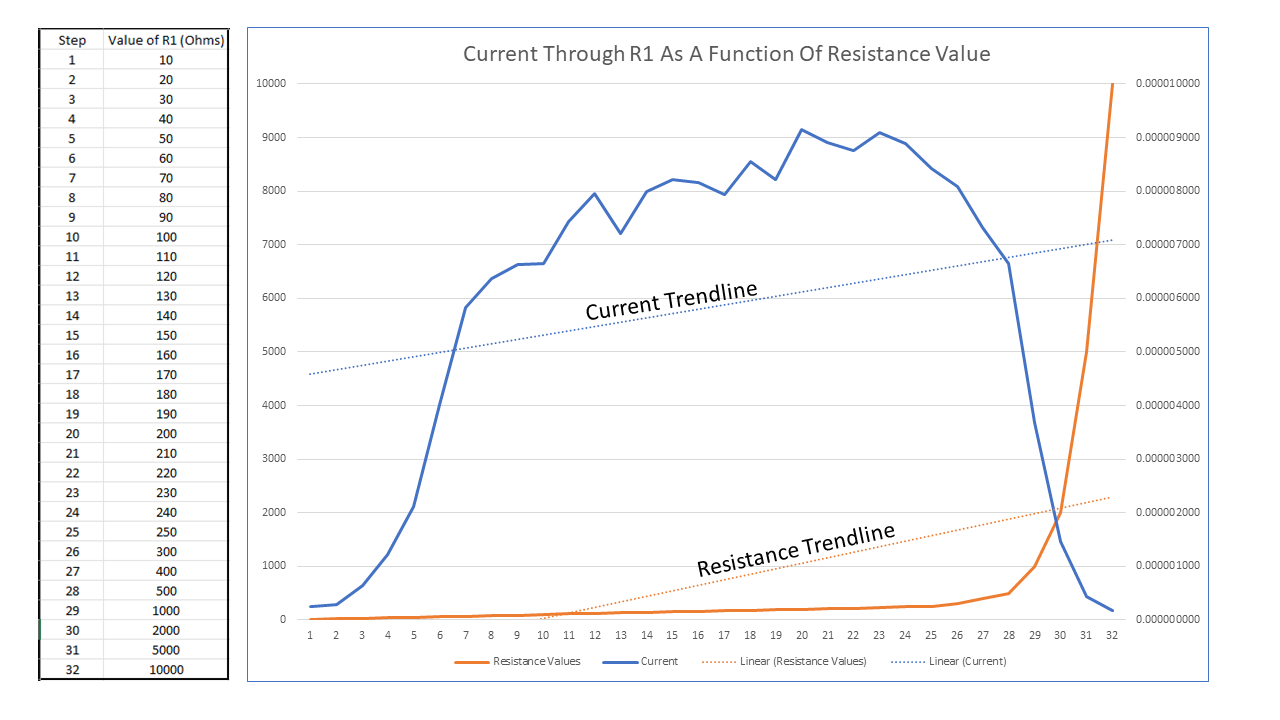
Figure 3: Current Through R1 As Function Of Resistance Value
Figure 3 presents what is in my view a 1st seminal test regarding this inquiry. Here we have resistance values increasing in 32 steps from 10 ohms up to 10,000 ohms (left Y axis, X axis), the orange curve, and their consequent current values, (right Y axis), the blue curve.
Here we see current rising rapidly as we progress from 10 ohms up to 70 ohms, after which it begins following an upward linear progression with current increasing as resistance increases up to 200 ohms, after which it begins a rapid decline, current approximating zero amps at 10,000 ohms. Here, I posit that measurements south of 100 ohms are not a legitimate reflection of current, but that the value is being “shunted” to ground, i.e., overloaded due to the low resistance values.
However, I do believe values between 100 ohms and 200 ohms to be a true reflection of the body’s response to “connectivity” to Earth ground. Note that the linear trendlines of Current and Resistance are parallel, i.e., correlative.
(Here please note that I am using a dedicated ground rod for these measurements, i.e. it is not bonded in any way to the electrical grid. This and I advise against use of the ground that is bonded to the electrical grid, as is required by electrical code for safety. Secondly, be cautious regarding the condition and proximity of electrical devices, e.g. a bedside lamp. Be sure that they are in safe electrical condition and that there is no opportunity for shock hazard.)
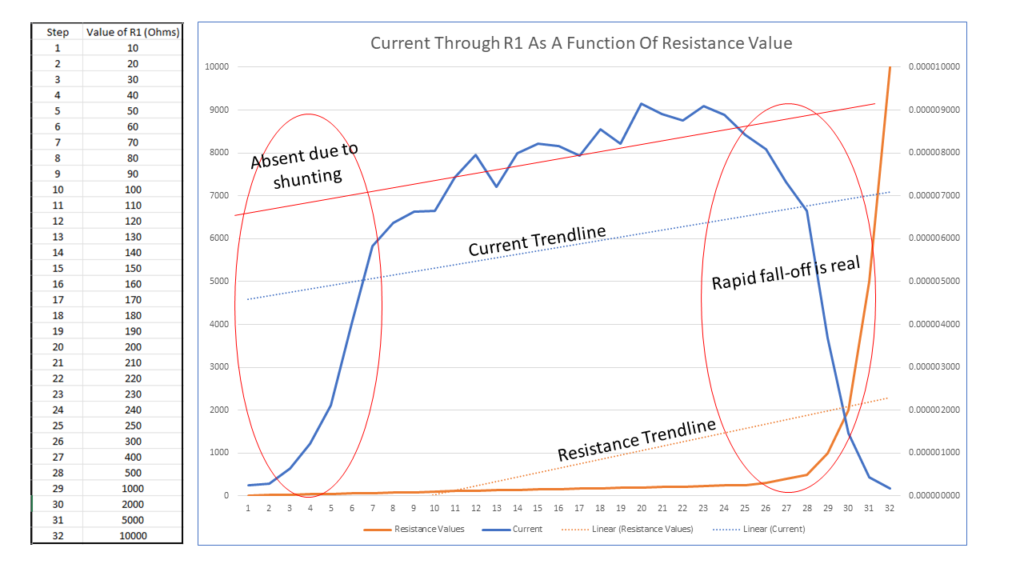
Figure 4: Interpretation
Figure 4 makes clear my interpretation of these results.
If the current offered by the body remains relatively constant as resistance increases, then we can expect the voltage across R1 to increase as resistance values increase, i.e., for the same current, the voltage across a higher value resistor will be higher. This appears to be what is happening…
The fact that current is increasing as resistance is increasing between 70 and 200 ohms is especially significant. If the electrical potential and impedance of the body were constant, like a battery, this would not be happening. Instead, current would be decreasing as resistance is increasing. Instead current appears to be increasing in this 70-200 ohm range. I posit that this is an “active” biological response in order to maximize connectivity, i.e., maximize current flow with Earth.
So, I presently consider the solid red line to be a sound estimate of the persistent current that the body is offering, even as resistance is increasing – until the precipitous drop above 200 ohms. This relatively constant current value is on the order of 8.5 micro-amps. This makes sense, but what of the precipitous fall above 200 ohms? Why is this happening?
To understand, we need to widen our scope to bring “impedance” into view.
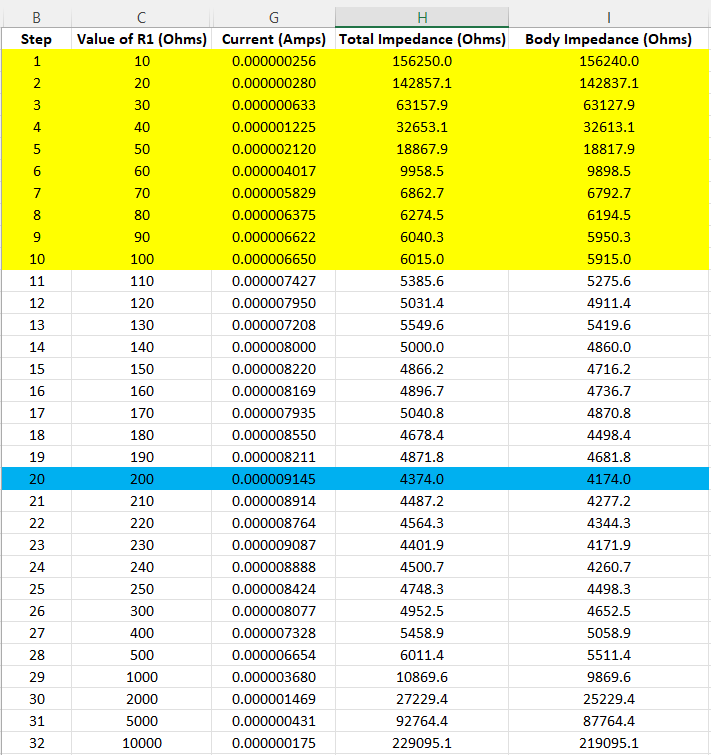
Figure 5: Resistance, Current, & Impedance
Figure 5 presents the columns H and I, “Total Impedance” and “Body Impedance”. Total impedance is based on the initial determination that the “source” body voltage is 40mVAC. Therefore, if we divide this source voltage by the current that is assessed at each resistance value, we arrive at “Total Impedance” at that value, column H.
If we subtract the value of the resistor we arrive at Column I, “Body Impedance”. If we discount the area below 100 ohms (yellow), because it is an outcome of shunting the signal (current hypothesis), and plot values of columns C and I above 100 ohms, it yields the graphs of Figure 6.
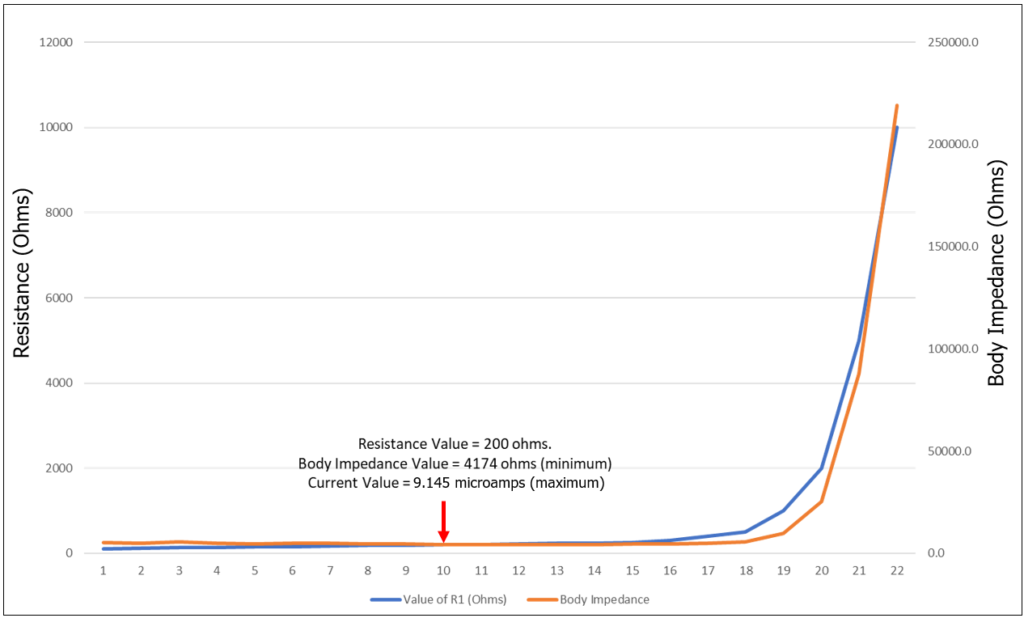
Figure 6: Resistance vs. Body Impedance
Figure 6 makes the correlation very clear. Body impedance bottoms out at 200 ohms and current is maximized at 9.145 microamps (see row 20 of table of Figure 5). The impedance of the body is 4174 ohms. Conversely, as the resistance value passes 500 Ohms, we begin to see a sharp increase in body impedance, from 5511 Ohms at 500, to 40 times that ― 219K Ohms at 10,000.
This result says, that if we connect the human body to a dedicated ground rod, via 200 ohms, current between the body and ground will be maximized. The question remains, to what purpose?
I initially performed this experimentation in 2003-2004, and filed US Patent 7,349,194 in July 2005, which was awarded in March of 2008. Note that sitting grounded was part of my personal meditation protocol at that time, and still is. This was at the height of my pursuit that would come to be trademarked as “Coherent Breathing”.
I repeated the experiment just prior to the writing of this article in January 2023, knowing that my original experiment was flawed due to my use of the electrical “ground” of my home.
In the 2006 timeframe, I drove a dedicated ground rod just outside my office wall and found a substantial difference (261 Ohms of difference relative to the values asserted in the patent application). I credit this difference with “noise” that existed (or exists) on the “power grid”, where noise on the grid is higher in amplitude than the biological signals we are trying to measure. I could see it with an oscilloscope. With the dedicated ground rod, I arrived at 190 Ohms. I presented the findings at the 2009 INSR meeting in Indianapolis with the results that the “resonant” resistance value was 190 Ohms.
My most recent determination is that the resistance that yields the highest current between the human body and Earth is 200 Ohms, very close to the 190 ohms previously asserted.
The key take-away here is that the body appears very responsive to “connectedness to Earth” at values less than 500 Ohms and increasingly non-responsive to values above 500 Ohms. This suggests to me that there is a biological function in play.
Again, note that these measurements were taken using an Agilent 3458A Ultra-Performance Digital Multimeter strictly measuring “AC Voltage” across R1. I remind the reader of this because I am employing an Agilent 34465A Digital Multimeter for the discussion below.
The “signal” is the other major aspect of the investigation – what are it’s characteristics?
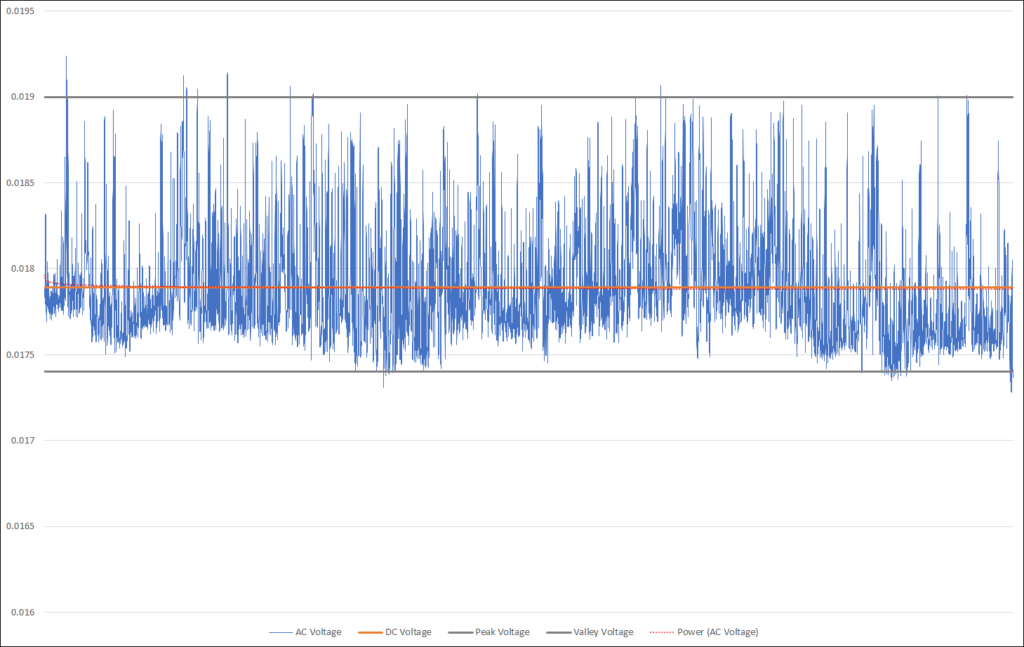
Figure 7: The Signal (29 Year Old Male With High Level Of Physical Conditioning)
Figure 7 is a 5 minute recording of the signal at 200 Ohms, sampling AC Voltage at 72 samples per second with an Agilent 34465A. The Y-axis is “Voltage”. We can see that the signal is hovering about +.018 VAC, this difference from +.040 VAC again being due to loading or “shunting” by the 200 Ohms to ground, knocking the voltage down by about half from its effectively unloaded potential of +.040 VAC. Note here again that it is “positive”, i.e. the body is presenting a positive potential relative to “ground”, the universal “common” for Earth-centric electrical systems.
This capture demonstrates both the voltage of the AC “signal” and a DC voltage. The difference between the gray lines is the peak-peak AC voltage of .0016 volts. Dividing it by the value of R1, 200 ohms, yields a current of 8 microamps, this as compared to the value of 9 microamps determined in 2006 using the 3458A.
The DC voltage is estimated by the power trend of the AC voltage, this being .018 volts. Dividing it by the value of R1, 200 ohms, yields a DC current of 90 microamps. Summarizing it in “current terms” (the voltage values divided by 200 ohms), the signal consists of an 8 microamp “AC” or alternating current riding atop a relatively constant 90 microamps of “DC” or direct current.
In electrical speak, there are two definitions of “current”. First, there is “electron current”, which is electrons moving along a conductor flowing from negative to positive, as electrons themselves are negatively charged, and “conventional current”, the origin of the term being the understanding that “charge” flows from positive to negative and electron flow results therefrom. No matter which term we choose to use, when the body which is “positive” is connected to Earth which is “negative”, electrons will flow from Earth to the body. The DC component, 90 microamps, is the primary one carrying electrons from Earth to the body.
Employing the conversion factor to convert current in Amperes to electrons per second, discovered by American physicist Robert Millikan, for which he earned the 1909 Nobel Prize, 89.5 microamperes equates to 558.5 trillion electrons per second flowing from Earth to the body.

The question is why? What is going on? This is a question that was not explored to its ultimate end in my work of 2005.

Figure 8: The Signal (29 Year Old Male With High Level Of Physical Conditioning)
In 2012, a significant paper considering the health effects of “earthing” was published in The Journal of Environmental and Public Health: Health Implications of Reconnecting the Human Body to the Earth’s Surface Electrons. It is a review of research and papers published by others. Some of the most significant findings are that sleeping grounded for 6 weeks yielded an overall reduction in cortisol levels over a 24 hour period, cortisol being an indication of sympathetic nervous system emphasis. Another study cited, posits that grounding shields the human body from electromagnetic fields induced by 60 Hertz (US standard) radiated by the common electrical wiring of the home or business, a 70% reduction in the 60 Hertz component present in the body.
Most interesting to me is the immediacy of effect reported on autonomic state, where upon grounding there is a prompt shift toward parasympathetic emphasis. This is the reason I was employing it during meditation, i.e. to help bring on autonomic balance and the elicitation of parasympathetic emphasis necessary to meditation. My curiosity led me on to find out if there was a “resonant” characteristic impedance that yielded the optimal exchange of current with ground. This turns out to be 200 ohms. When one is connected this way, one can feel increased current in the body: bioenergy, “qi”. When one is breathing “coherently” an increase in current between body and ground can be observed.
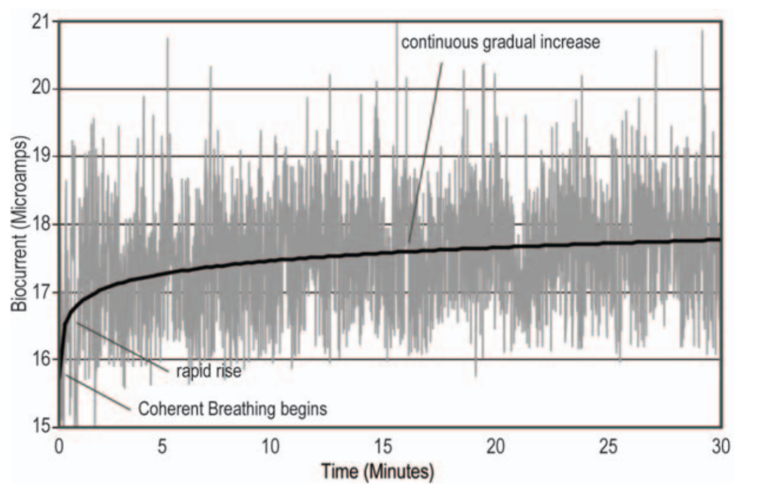
Figure 9: Rapid Rise In Bio-current While Breathing Coherently (Source: The New Science Of Breath, 2005)
Figure 8 presents the rise in bio-current as a consequence of Coherent Breathing. Notice that the rise is very rapid when Coherent Breathing begins, but a gradual rise continues for the duration of measurement.
Why is current rising? Given that Earth ground is our solid reference, it has to be true that Coherent Breathing is resulting in the body becoming more positive as breathing continues, i.e., the bioenergetic potential of the body is increasing where it is the cells of the body, estimated by as 30 trillion in number, that are generating this potential. (This is certain to be a factor in why resonant breathing is healthful ― more blood flow, more fluid exchange, more oxygenization ― more energy generation…)
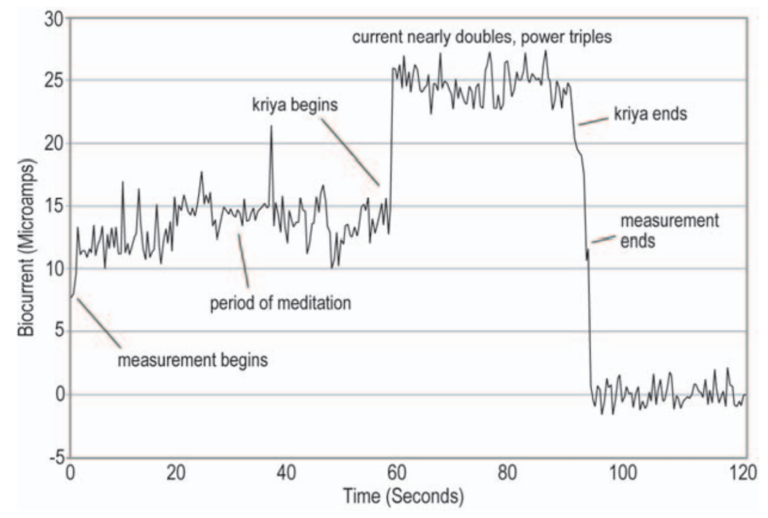
Figure 10: Bio-current Of Spontaneous Kriya (Source: The New Science Of Breath, 2005)
Figure 9 above, demonstrates what can happen when: a) grounded, b) when breathing “coherently”, c) when meditating. Current is rising gradually until, snap, it doubles instantly. When this happens, the body begins to “shake” and “move of its own accord”, hence “spontaneously”. Note that this recording was taken while lying flat, so the movement is that of the spine and limbs undulating in X, Y, and Z directions. If we let it proceed of its own accord without interfering, it will make its way throughout the body, seemingly addressing every aspect of the body where tension resides. Eventually, it will end and the body will be completely relaxed and still.
My initial personal discovery of this occurred while I was grounded, but after learning of it, I discovered that it is fundamentally a function of resonant breathing and deep relaxation, i.e. grounding is not necessary. However, as I am now aware of the electrical relationship between the body and Earth, I prefer to do it grounded in order to let the body and Earth have their electrical dialog.
Note that “Coherent Breathing” is a special form of resonant breathing that errs on the parasympathetic side of the autonomic equation. If we accept that .1 Hertz is the nominal frequency of resonance of the average adult, Coherent Breathing proper, operates at 5.1 breaths per minute. For this reason, it can automatically result in meditation, and with deep conscious relaxation, this “spontaneous kriya”, a cherished Yogic phenomenon associated with shaktipat (divine transmission) and the awakening of kundalini. (4)
~
There is an emerging understanding, though not new, that many diseases, both mental and physical are a consequence of mitochondrial dysfunction. Mitochondria are biological nano-engines inside cells that produce energy in the form of ATP (adenosine triphosphate). (6) Mitochondria, estimated to be billions of years old, are thought to pre-date all eukaryotic (cells with a nucleus) life forms, this includes all forms of life that we can see with the naked eye, plant and animal, due to the fact that other life forms could not have existed without them. This is because mitochondria are responsible for metabolism, on which all forms of eukaryotic life itself depends. Interestingly, the distinction between cold-blooded and warm-blooded animals is their metabolic rate, and with their metabolic rate, the number of mitochondria that their cells possess. More energy production results in increased thermal energy produced. (7)
Because the body has trillions of cells, and each cell has ~100 mitochondria (N), the combined energy output of the human body can be significant, enough to generate .25 HP or more of work for a sustained period. (.25 HP may not sound like much, but it has been posited that mammalian body, mass per mass, generates more energy than the sun. (N)) The reason why work can be sustained is that energy output can be sustained; the reason why energy output can be sustained is that mitochondria are busy recycling the ATP that is used to perform work. Mitochondria perform this task non-stop, lest our lives come to an end. I has also been posited that every day we produce an amount of ATP that approximates our own weight – a mind blowing matter. (8)
Interestingly, many of the health problems that can be attributed to metabolism, and potentially, to mitochondrial status are those of a “sympathetic nature”, i.e., autonomic nervous system overdrive. This condition can be elicited by chronically over-doing it, where I mean intentionally working or working-out too hard and/or too long.
It can also be triggered by alarm where it is also known as “fight or flight”. Persistent fight/flight demands energy production non-stop, which makes like demands on the body’s microscopic energy apparatus – the mitochondria.
Fight or flight as the reader may know, has evolved to protect the species in times of crisis, be it major or minor. It is not desirable that it be prolonged – yet this is the case for many that suffer from the myriad symptoms that can result. If prolonged, and energy consumption outpaces energy production, it can result in a downward spiral of health and well-being, both mental and physical. Traditional Chinese Medicine, with it’s 5000+ years of history has a proverb for this: “One cannot burn the candle at both ends.”, where the candle has come to be understood as “one’s essence”, or “yin”.
~
What does this have to do with the body’s electrical relationship to Earth? The answer to this question is that ATP generation and recycling is highly dependent on “electrons”.(9) It is generally assumed that we receive all the electrons we need from respiratory and dietary intake. Yet, the body seems to want to maximize the flow of electrons from Earth “ground” given the chance. Does the Earth “power” life on its surface?
Considering this question, the answer is certainly, “Yes.”, given that all life is nourished in one way or another by the environment that exists at the surface of the planet, taking into account the importance of solar energy. Without solar energy and photosynthesis, there would be no visible life as we know it, but without Earth we would have no place to stand. The question is, “Does planet Earth power life in a literal sense, i.e. electrically?”
The graphs of Figures 9 and 10 demonstrate what happens when the body is engaged in muscular activity, Figure 9 demonstrating rhythmic diaphragm motion of Coherent Breathing, rising from a resting quiescent state over a period of 30 minutes, and Figure 10 demonstrating the muscular actions of the spontaneous kriya, which are “shaking”, arrhythmic movements, during which time various muscles throughout the body are flexing and relaxing simultaneously, the period of the kriya proper lasting about 30 seconds.
In the Coherent Breathing case, current climbs steeply and then gradually over the entirety of the 30 minute period. In the case of the kriya, current snaps abruptly, very much like the rising and falling edges of a square wave, current roughly doubling at its peak. In retrospect, what I have failed to demonstrate in either of these cases is the quiescent current, absent of either deep rhythmic breathing or kriya.
Is this current from Earth to the body a window into the mitochondrial “electron transport chain” and mitochondrial status in general? In my patent application of 2005, I posited that it could be used as a means of assessing health and well-being.
~
Figure 9 above, demonstrates what can happen when: a) grounded, b) when breathing “coherently”, c) when meditating. Current is rising gradually until, snap, it doubles instantly. When this happens, the body begins to “shake” and “move of its own accord”, hence “spontaneously”. Note that this recording was taken while lying flat, so the movement is that of the spine and limbs undulating in X, Y, and Z directions. If we let it proceed of its own accord without interfering, it will make its way throughout the body, seemingly addressing every aspect of the body where tension resides. Eventually, it will end and the body will be completely relaxed and still.
My initial personal discovery of this occurred while I was grounded, but after learning of it, I discovered that it is fundamentally a function of resonant breathing and deep relaxation, i.e. grounding is not necessary. However, as I am now aware of the electrical relationship between the body and Earth, I prefer to do it grounded in order to let the body and Earth have their electrical dialog.
Note that “Coherent Breathing” is a special form of resonant breathing that errs on the parasympathetic side of the autonomic equation. If we accept that .1 Hertz is the nominal frequency of resonance of the average adult, Coherent Breathing proper, operates at 5.1 breaths per minute. For this reason, it can automatically result in meditation, and with deep conscious relaxation, this “spontaneous kriya”, a cherished Yogic phenomenon associated with shaktipat (divine transmission) and the awakening of kundalini. (4)
~
There is an emerging understanding, though not new, that many diseases, both mental and physical are a consequence of mitochondrial dysfunction. Mitochondria are biological nano-engines inside cells that produce energy in the form of ATP (adenosine triphosphate). (6) Mitochondria, estimated to be billions of years old, are thought to pre-date all eukaryotic (cells with a nucleus) life forms, this includes all forms of life that we can see with the naked eye, plant and animal, due to the fact that other life forms could not have existed without them. This is because mitochondria are responsible for metabolism, on which all forms of eukaryotic life itself depends. Interestingly, the distinction between cold-blooded and warm-blooded animals is their metabolic rate, and with their metabolic rate, the number of mitochondria that their cells possess. More energy production results in increased thermal energy produced. (7)
Because the body has trillions of cells, and each cell has ~100 mitochondria (N), the combined energy output of the human body can be significant, enough to generate .25 HP or more of work for a sustained period. (.25 HP may not sound like much, but it has been posited that mammalian body, mass per mass, generates more energy than the sun. (N)) The reason why work can be sustained is that energy output can be sustained; the reason why energy output can be sustained is that mitochondria are busy recycling the ATP that is used to perform work. Mitochondria perform this task non-stop, lest our lives come to an end. I has also been posited that every day we produce an amount of ATP that approximates our own weight – a mind blowing matter. (8)
Interestingly, many of the health problems that can be attributed to metabolism, and potentially, to mitochondrial status are those of a “sympathetic nature”, i.e., autonomic nervous system overdrive. This condition can be elicited by chronically over-doing it, where I mean intentionally working or working-out too hard and/or too long.
It can also be triggered by alarm where it is also known as “fight or flight”. Persistent fight/flight demands energy production non-stop, which makes like demands on the body’s microscopic energy apparatus – the mitochondria.
Fight or flight as the reader may know, has evolved to protect the species in times of crisis, be it major or minor. It is not desirable that it be prolonged – yet this is the case for many that suffer from the myriad symptoms that can result. If prolonged, and energy consumption outpaces energy production, it can result in a downward spiral of health and well-being, both mental and physical. Traditional Chinese Medicine, with it’s 5000+ years of history has a proverb for this: “One cannot burn the candle at both ends.”, where the candle has come to be understood as “one’s essence”, or “yin”.
~
What does this have to do with the body’s electrical relationship to Earth? The answer to this question is that ATP generation and recycling is highly dependent on “electrons”.(9) It is generally assumed that we receive all the electrons we need from respiratory and dietary intake. Yet, the body seems to want to maximize the flow of electrons from Earth “ground” given the chance. Does the Earth “power” life on its surface?
Considering this question, the answer is certainly, “Yes.”, given that all life is nourished in one way or another by the environment that exists at the surface of the planet, taking into account the importance of solar energy. Without solar energy and photosynthesis, there would be no visible life as we know it, but without Earth we would have no place to stand. The question is, “Does planet Earth power life in a literal sense, i.e. electrically?”
The graphs of Figures 9 and 10 demonstrate what happens when the body is engaged in muscular activity, Figure 9 demonstrating rhythmic diaphragm motion of Coherent Breathing, rising from a resting quiescent state over a period of 30 minutes, and Figure 10 demonstrating the muscular actions of the spontaneous kriya, which are “shaking”, arrhythmic movements, during which time various muscles throughout the body are flexing and relaxing simultaneously, the period of the kriya proper lasting about 30 seconds.
In the Coherent Breathing case, current climbs steeply and then gradually over the entirety of the 30 minute period. In the case of the kriya, current snaps abruptly, very much like the rising and falling edges of a square wave, current roughly doubling at its peak. In retrospect, what I have failed to demonstrate in either of these cases is the quiescent current, absent of either deep rhythmic breathing or kriya.
Is this current from Earth to the body a window into the mitochondrial “electron transport chain” and mitochondrial status in general? In my patent application of 2005, I posited that it could be used as a means of assessing health and well-being. ~
Another examination is in order, this being “quiescent” subtle breathing followed by exercise that gradually ramps up in intensity. Does electron flow from the Earth to the body increase during muscular exertion and its concomitant demand for bodily energy production? Here I am quite certain that the answer will be, “Yes”. The reason I am certain is that ATP production requires electrons.
If we use the estimate of the number of cells in the body from Scientific American (N), which is 30 trillion, all of which contain a nucleus, and therefore mitochondria, this works out to ~19 electrons per cell per second. Given that the number of mitochondria are estimated to be 100 per cell (N), and that each mitochondria are employing many electrons simultaneously, these numbers don’t add up. ~
The topic of “cellular respiration” and the quest to understand how it worked was a highly sought after holy grail of biochemistry for over a century. Because the interior of the eukaryotic cell contains many microscopic structures, and microscopes themselves where undergoing technological evolution to ever greater magnification, and because of the puzzling biological process that was taking place in the mitochondria, it took many decades of scientific pursuit and argumentation to understand finally confirm, the advent of the electron microscope in 1939 aiding in this process.
ATP, adenosine triphosphate, had been discovered as the chemical energy being produced by the mitochondria in 1929, ATP being the source of energy for all other cellular processes, but the very means by which it was being produced was the incredible mystery.
In the end it was determined that inside the tiny mitochondria, of which it is estimated that there are 100 per cell, there exists an extremely peculiar nano-generator that produces ATP. It consists of a “respiratory chain”, also known as as the “electron transport chain”. (9) This chain employs the energy released by oxidation of glucose to push or “pump” protons over a membrane in order to create a reservoir of positive energy that can then be catalyzed into ATP and released into the cell. It has been determined that 1 molecule of glucose produces 38 molecules of ATP. This is generally considered to be a most fundamental role of mitochondria, for without ATP eukaryotic cells could not function and would perish.
This fundamental process of proton pumping and the formation of ATP is now known to be the basis of life and is the foundational biochemical process present in fermentation, photosynthesis, and respiration.
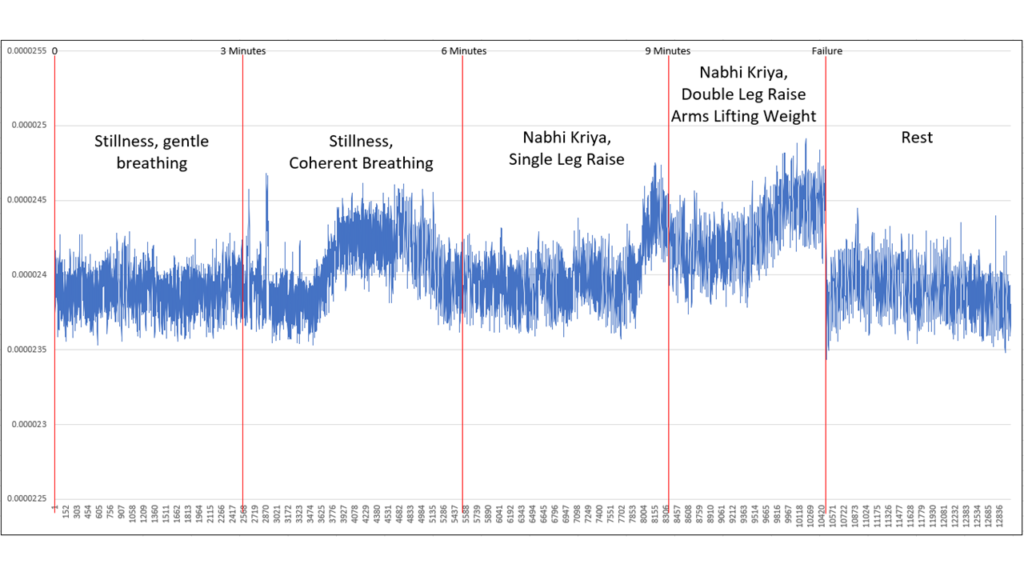
Figure 11: Current demand during periods of stillness, breathing, work, and rest. (70 year old male.)
As mentioned previously, a best way to validate that this electron flow from Earth to the human body (skin) is a function of mitochondrial respiratory chain demand is to test to see if current increases when the body is: a) breathing, and b) working. Figure 11 above is this experiment. The arrangement of the apparatus is the same as that described in Figure 2, and the results previously depicted in Figure 7, i.e. voltage is being measured across a 200 Ohm resistor and recorded.
The 14 minute period is divided into 5 segments:
1) Supine position on the mat breathing very lightly. This period lasts 3 minutes.
2) Supine position on the mat employing Coherent Breathing. This period lasts 3 minutes.
3) Supine position on the mat, performing Nabhi Kriya with alternating leg lifts to vertical position, inhaling while raising and exhaling while lowering, rapid succession. Fatigue building rapidly during the last 30 second or so.
4) Supine position on the mat, performing Nabhi Kriya with double leg lifts to vertical position, hands raising and lowering 12 pound weight simultaneously, inhaling while raising and exhaling while lowering, rapid succession. Performed until failure.
5) Supine position on the mat, relaxing and recovering from work.
Measurements of peak voltage, current, and electron flow are presented in Figure 11 below.
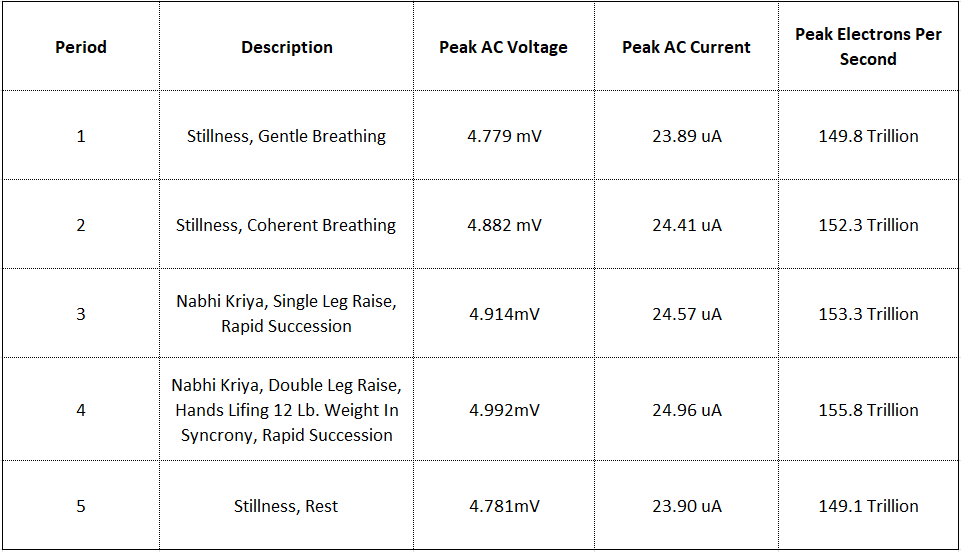
Figure 11: Table summarizing peak values of voltage, current, and electron flow during 5 periods of activity.
The table of Figure 11 summarizes the results of the graph of Figure 10..
It is important to note that I am using an Agilent 34401A sampling at 16 times per second for this measurement, as opposed to the Keysight 34465A measurement of Figure 7. There is a large difference in the current flow, 558 trillion electrons per second vs. 152 trillion. There are 2 possibilities for this discrepancy: 1) the instrument being used (which should not be the case), or age of the subject being measured. We will determine if the instrument is at issue in coming days. If not, we may be viewing the difference in mitochondrial status between the a fit 29 year old and a fit 70 year old. Continuing…
Period 1 is that of stillness and quiet breathing.
During period 2, that of Coherent Breathing, we see current rise. I posit that this is due to diaphragm action (use of a large strong muscle), resonant circulation of blood and fluids, and an average increase in blood oxygen saturation, all of which facilitate increased energy production in the body and consequent requirement for electrons.
During period 3, current then returns to a level slightly above the initial period of stillness but then rises sharply toward the end where exhaustion of muscles is beginning to occur, and lactic acid burn is building. This is interesting because breathing is occurring rapidly in time with alternate leg lifting, but the activity is not presenting much energetic demand, until it nears the end when exhaustion and lactic acid burn is occurring.
Period 3 is followed by a few seconds of relaxation and then Period 4 begins with Nabhi Kriya, lifting both legs along with simultaneous lifting of a 12 pound weight with both hands begins. Inhalation is occurring during lifting and exhalation during lowering. This continues until failure. Here we see current rise to its peak.
Editing…
~
As we walk and move around, our body’s are positively charged relative to the Earth we walk on. All electrical systems in which current flows have a positive and and negative “plane”. In electronic systems based on digital switching, a common problem is “inadequate grounding”, “ground bounce”, and “ground plane noise”. This is because digital transitions from “0” to “1” or vise versa, on the basis of a clock signal to which a large digital system is synchronized can create large electrical impulses, these impulses “lifting the ground plane” momentarily. These problems can result in a binary “1” becoming a binary “0” or vise versa, potentially many 1s and 0s being corrupted simultaneously, i.e. errors in the information being processed. This is generally an outcome of poor electronic design including inadequate or improper distribution of the ground plane throughout the system. Here we are speaking nano-seconds or micro-seconds, depending on the switching speed. Here I am referring to digital logic that is operating at 5 volts or less, not micro-volts, as is the human brain.
It was established long ago by Bell Labs that the information carrying capacity of a nominal communication channel is ultimately limited by noise, where the higher the noise level, the more eroroneous is the signal being received. As a channel becomes noisier and noisier, the less and less information it can carry usefully. A channel can eventually become so noisy that “error correction” is utilizing so much of the bandwidth that the channel becomes of no practical use.
The potential of the human body to ground via the skin is very small as measured at the body surface, less than a AAA battery which is 1.5V. Interestingly, this is not a reflection of the amount of energy that the human body can generate, where it is generally considered that the human body can create an output of .25 horsepower or more of work. This amount of work would exhaust a AAA cell in a moment.
An important question regards sunlight: Does sunlight impart a positive charge to the human body and to all “life” on the surface of the planet. It is difficult to find the answer to this seemingly simple question in electrical terms, but it should be easy to determine experimentally, i.e., sit in the sun and see if the quiescent voltage of the body increases. This is an experiment I will perform and edit this article to report the results.
The way I conceive of “the overall model of life on Earth”, is that light from the sun is positive in nature, and that Earth is negative. If this is true, then by maintaining connectedness with Earth, we are channeling positive energy that our bodies collect, “sending it to Earth”. This would be consistent with the concept of “conventional current”, positive charge flowing to negative source, instigating electrons to flow from negative to positive.
Plant life growing on the surface of the planet collects energy from sunlight for purposes of photosynthesis. Photosynthesis is the way that plants synthesize energy from sunlight, without which they cannot grow. As I understand plant life, actual growth is a nocturnal process, i.e., plants collect energy during daylight hours, and turn that energy into growth during darkness. During daylight hours, do the leaves of trees present a negative “ground” field, to which positive solar energy flows?
If this model is about right, is it relevant to other forms of life? Does the human body send positive energy to Earth (positive charge), and does Earth send back electrons, resulting in this fluctuating current? If true, does the human organism need this exchange, biologically? Is human growth nocturnal? Do we need connectivity with Earth to facilitate this growth in an optimal way? Is the lack of connectivity with Earth contributing to the epidemic of sleeplessness in industrialized nations? Maybe our internal “ground planes” are noisy.
When a body is instrumented, it is common to see electrical chaos, as if the central nervous system is “noisy”. In the case of wakefulness, this noise results in muscle tension, high blood pressure, anxiety, and worry. These are symptoms of what I have referred to for decades now as “sympathetic dominance”, i.e. the chronic overactivity of the autonomic nervous system, contributing to myriad health consequences and diseases. I don’t know but I suspect that living in a world that is electrically disconnected from Earth is contributing to this. What does it take to flip a “1” into a “0” in the human brain?
~
There is an emerging understanding, though not new, that many diseases, both mental and physical are a consequence of mitochondrial dysfunction. Mitochondria are biological nano-engines inside cells that produce energy in the form of ATP (adenosine triphosphate). (6) Mitochondria, estimated to be billions of years old, are thought to pre-date all eukaryotic (cells with a nucleus) life forms, this includes all forms of life that we can see with the naked eye, plant and animal, due to the fact that other life forms could not have existed without them. This is because mitochondria are responsible for metabolism, on which all forms of eukaryotic life itself depends. Interestingly, the distinction between cold-blooded and warm-blooded animals is their metabolic rate, and with their metabolic rate, the number of mitochondria that their cells possess. More energy production results in increased thermal energy produced. (7)
Because the body has trillions of cells, and each cell has 100 mitochondria, the combined energy output of the human body can be significant, enough to generate .25 HP or more of work for a sustained period. (.25 HP may not sound like much, but it has been posited that mammalian body, mass per mass, generates more energy than the sun.) The reason why work can be sustained is that energy output can be sustained; the reason why energy output can be sustained is that mitochondria are busy recycling the ATP that is used to perform work. Mitochondria perform this task non-stop, lest our lives come to an end. I has also been posited that every day we produce an amount of ATP that approximates our own weight – a mind blowing matter. (8)
Interestingly, many of the health problems that can be attributed to metabolism, and potentially, to mitochondrial status are those of a “sympathetic nature”, i.e., autonomic nervous system overdrive. This condition can be elicited by chronically over-doing it, where I mean intentionally working or working-out too hard and/or too long.
It can also be triggered by alarm where it is also known as “fight or flight”. Persistent fight/flight demands energy production non-stop, which makes like demands on the body’s microscopic energy apparatus – the mitochondria.
Fight or flight as the reader may know, has evolved to protect the species in times of crisis, be it major or minor. It is not desirable that it be prolonged – yet this is the case for many that suffer from the myriad symptoms that can result. If prolonged, and energy consumption outpaces energy production, it can result in a downward spiral of health and well-being, both mental and physical. Traditional Chinese Medicine, with it’s 5000+ years of history has a proverb for this: “One cannot burn the candle at both ends.”, where the candle has come to be understood as “one’s essence”, or “yin”.
More to follow…
In summary I will be editing this article into the future as I have done with previous COHERENCE articles, as there is more to do.
References:
1) Earthing: The Most Important Health Discovery Ever!, Ober, Zucker, Sinatra, et. al., 2014.
3) Medical Physiology, Guyton& Hall,
4) Origins of Yoga – The phenomenon of spontaneous kriyas, https://www.elephantjournal.com/now/origins-of-yoga-the-phenomenon-of-spontaneous-kriya
5) NASA, Schumann Resonance: https://www.nasa.gov/mission_pages/sunearth/news/gallery/schumann-resonance.html#:~:text=Each%20lightning%20burst%20creates%20electromagnetic,heartbeat%20known%20as%20Schumann%20resonance.
6) Adenosine-5-triphosphate, PubChem, National Library of Medicine
7) Brain Energy, Christopher M. Palmer, M.D., BenBella Books, 2022.
8) Power, Sex, Suicide, Nick Lane, Oxford University Press, 2005.
9) Respiratory Chain – an overview | ScienceDirect Topics
Appendix
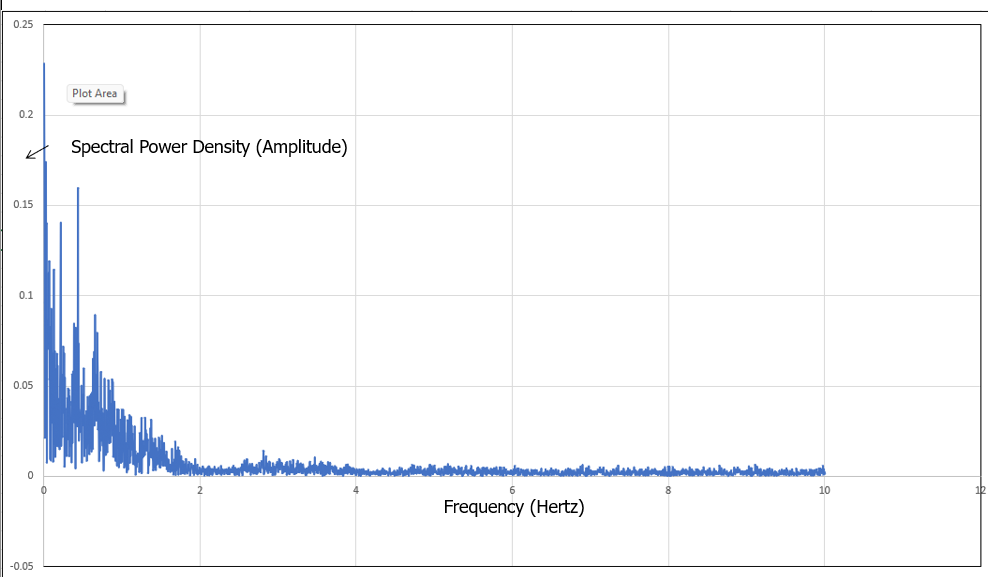
One of the interesting benefits of finding this “resonant” resistance and impedance is that the “signal” is maximized, i.e., voltage across R1 is maximized. Hence, it gives us magnified insight into the signal, which still takes a relatively sophisticated instrument to capture with accuracy.
The AC signal is quite small, but still about 2000 times the voltage of brainwave signals measured at the surface of the scalp. Is it “noise” or does it contain viable biological information? To find out we can perform a Fourier analysis to yield its spectral content, in the parlance, it’s Power Spectral Density (PSD), allowing us to examine the amplitude of it’s frequency components.
Figure 10 presents the spectral analysis of the signal from 0 Hertz to 10 Hertz., where I’ve gone up to 10Hz. in hopes of finding some signal activity at functional brainwave bands (delta, theta, alpha, and beta) that exist below 10 Hz. and Schumann Resonance frequencies, 7-12 Hz. Figure 9 below is a NASA depiction of Schumann waves propagating between Earth’s surface and the ionosphere.
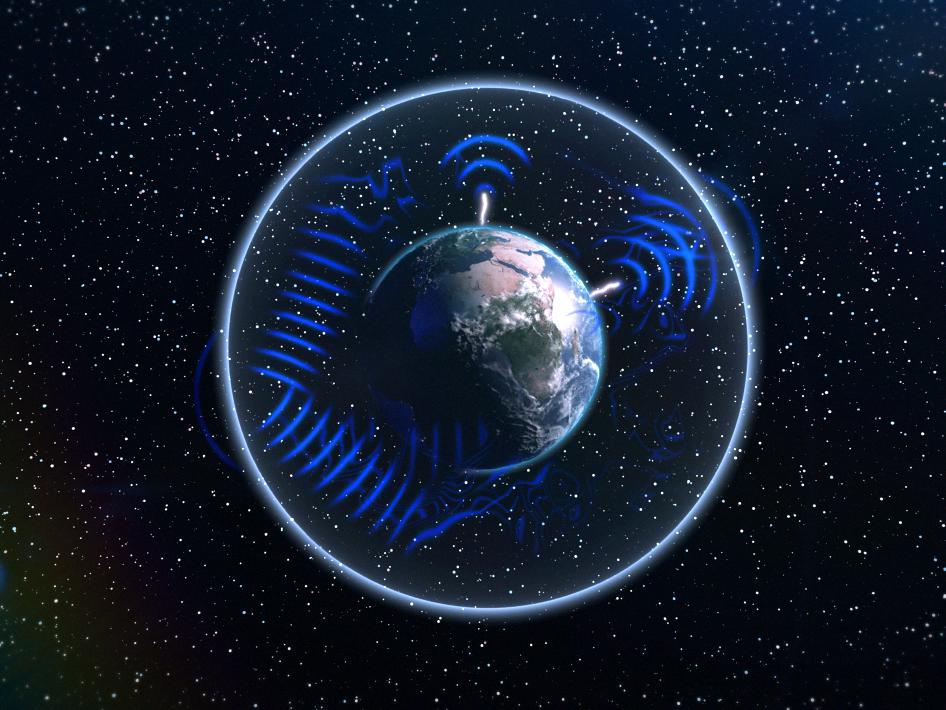
From NASA:
“At any given moment about 2,000 thunderstorms roll over Earth, producing some 50 flashes of lightning every second. Each lightning burst creates electromagnetic waves that begin to circle around Earth captured between Earth’s surface and a boundary about 60 miles up. Some of the waves – if they have just the right wavelength – combine, increasing in strength, to create a repeating atmospheric heartbeat known as Schumann resonance.
The waves created by lightning do not look like the up and down waves of the ocean, but they still oscillate with regions of greater energy and lesser energy. These waves remain trapped inside an atmospheric ceiling created by the lower edge of the “ionosphere” – a part of the atmosphere filled with charged particles, which begins about 60 miles up into the sky. In this case, the sweet spot for resonance requires the wave to be as long (or twice, three times as long, etc.) as the circumference of Earth. This is an extremely low frequency wave that can be as low as 8 Hertz (Hz) – some one hundred thousand times lower than the lowest frequency radio waves used to send signals to your AM/FM radio. As this wave flows around Earth, it hits itself again at the perfect spot such that the crests and troughs are aligned. Voila, waves acting in resonance with each other to pump up the original signal.
While they’d been predicted in 1952, Schumann resonances were first measured reliably in the early 1960s. Since then, scientists have discovered that variations in the resonances correspond to changes in the seasons, solar activity, activity in Earth’s magnetic environment, in water aerosols in the atmosphere, and other Earth-bound phenomena.” (5)
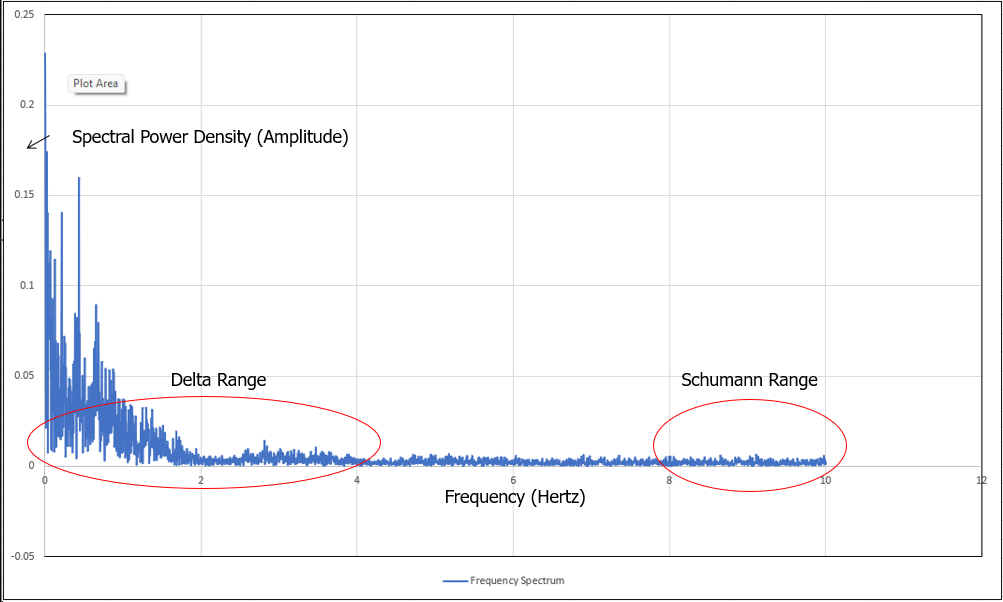
Figure 12: Referring Again To The Frequency Spectrum.
Disappointingly, I don’t find amplitude variations in the Schumann frequency range, which suggest that there isn’t unique electrical activity between the Earth and the body in this range. There are a number of Schumann frequency generators on the market that presuppose that there is value in synchronizing the human body with Schumann frequencies, however, so far I don’t see indication of electrical interaction with Earth, unless this interaction is in the sub-harmonic range.
Looking down-spectrum, most of the power is in the low frequency range, below 4 Hz (Delta brainwave range). Of course this is where we commonly see the Mayer phenomenon of .1 Hz, below that the frequency of “Coherent Breathing”, here at .089 Hz., and below that, sympathetic nervous system electrical activity.
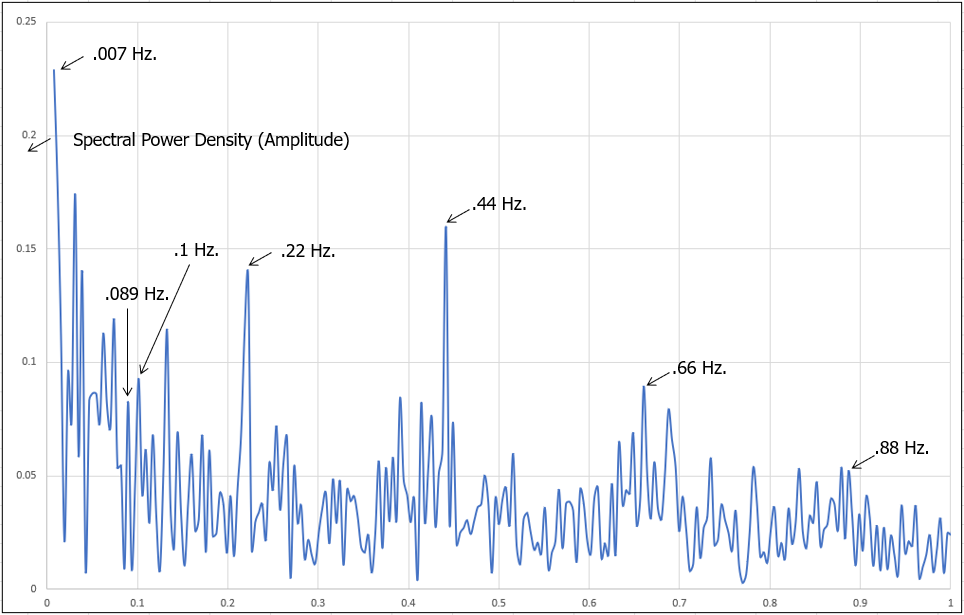
Figure 13: Frequencies In The 1 Hertz Band
Figure 11 presents some interesting markers in the 1 Hertz spectrum, here highest amplitude being .007 Hertz, the frequency range of sympathetic nervous system activity as viewed with an HRV or Valsalva Wave monitor. The next marker is .089 Hz., the approximate frequency of Coherent Breathing, the subject breathing with COHERENCE 2 Bells. Right next to it is the omnipresent .1 Hertz Mayer component, the nominal frequency of resonance of the typical adult. Note that the amplitude of .1 Hz. is slightly higher than that of Coherent Breathing.
After this we see the cascading frequencies .22, .44, .66, and .88, apparent harmonics…? The subject being recorded sneezed during this 5-minute period. I believe that these frequency peaks are a result of the sneeze, which was a relatively powerful event as compared to quiescent stillness and breathing. This calls for the experiment to be repeated.
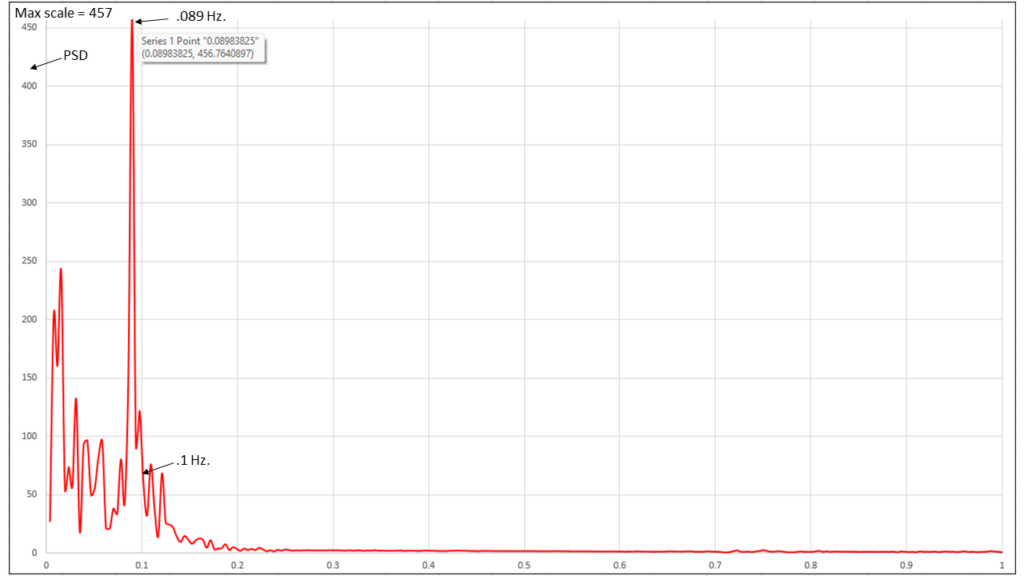
Figure 12 presents the frequency spectrum of the Valsalva Wave (a trademarked name for the wholistic circulatory wave that rises and falls in the circulation coincident with resonant exhalation and inhalation) recorded at the earlobe simultaneous with the electrical recording. Note that the frequency components below .3 Hertz are present, but there is no indication of activity above .3 Hertz, suggesting that the electrical activity of the body as view at the surface is not reflected in the motion of the blood.
In both the Valsalva Wave and the Heart Rate records (Figures 12 and 13), we see the .1 Hz. Mayer Wave component far below that of the breathing frequency (.089 Hz.). This was not true in the electrical record.
In the Valsalva Wave record, the PSD of .1 Hz = 75.76. Dividing it by the peak amplitude, that of the breathing frequency, .089 Hz., yields 75.76/456.76 = 16.58%.
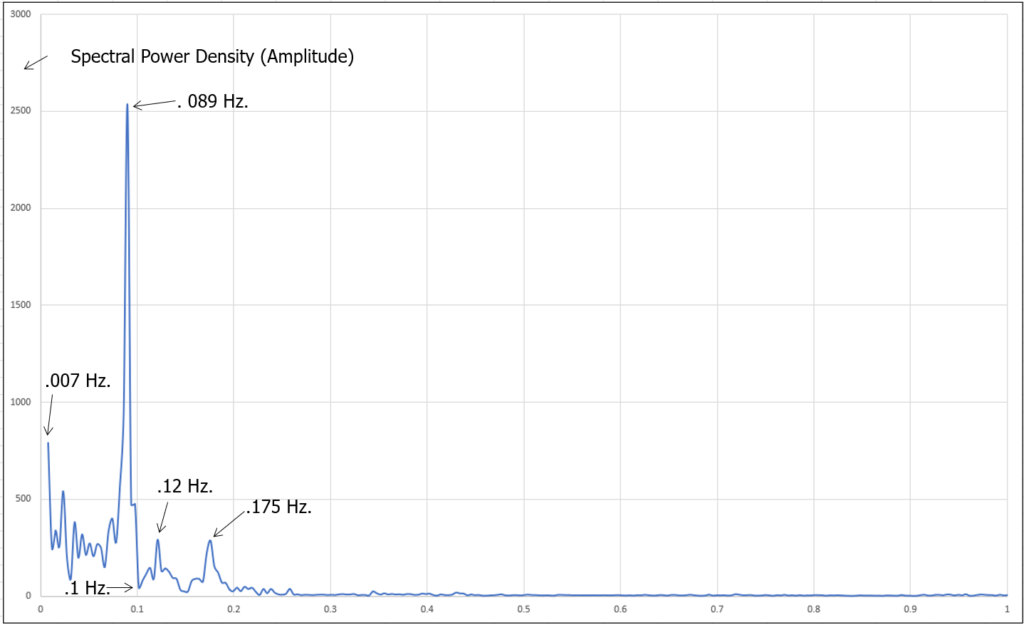
Figure 13 presents the frequency spectrum of the heart rate (the HRV cycle) as detected at the earlobe (at the same time the Valsalva Wave is being detected by the same sensor at the same earlobe). Notice that the .089 Hertz spire is present in both.
In the Heart Rate record of Figure 13, the PSD of .1 Hz = 44.39. Dividing it by the peak amplitude, that of breathing frequency, .089 Hz., yields 44.39/2534.07 = 1.7%.
I don’t know why .1 Hertz differs this much between the two. It is a question worth looking into. The electrical record of Figure 11 shows the amplitude of the breathing frequency of .089 Hz. to be below that of .1 Hertz. Why? Again, a question worth looking into.
These are the first spectral views of the Valsalva Wave and Heart Rate that I have captured while the subject is connected to ground via 200 ohms. There is something unusual about both of them, this being that they are relatively very quiet – quiet enough to clearly see .1 Hz (the ever-present Mayer Wave frequency), distinguished very clearly from the breathing frequency, which in this case is .089 Hertz. This requires more investigation…
~
~
What does this have to do with the body’s electrical relationship to Earth? The answer to this question is that ATP generation and recycling is highly dependent on “electrons”.(9) It is generally assumed that we receive all the electrons we need from respiratory and dietary intake. Yet, the body seems to want to maximize the flow of electrons from Earth “ground” given the chance. Does the Earth “power” life on its surface?
Considering this question, the answer is certainly, “Yes.”, given that all life is nourished in one way or another by the environment that exists at the surface of the planet, taking into account the importance of solar energy. Without solar energy and photosynthesis, there would be no visible life as we know it, but without Earth we would have no place to stand. The question is, “Does planet Earth power life in a literal sense, i.e. electrically?”
The graphs of Figures 8 and 9 demonstrate what happens when the body is engaged in muscular activity, Figure 8 demonstrating rhythmic diaphragm motion of Coherent Breathing, rising from a resting quiescent state over a period of 30 minutes, and Figure 9 demonstrating the muscular actions of the spontaneous kriya, which are “shaking”, arrhythmic movements, during which time various muscles throughout the body are flexing and relaxing simultaneously, the period of the kriya proper lasting about 30 seconds.
In the Coherent Breathing case, current climbs steeply and then gradually over the entirety of the 30 minute period. In the case of the kriya, current snaps abruptly, very much like the rising and falling edges of a square wave, current roughly doubling at its peak. In retrospect, what I have failed to demonstrate in either of these cases is the quiescent current, absent of either deep rhythmic breathing or kriya.
Another examination is in order, this being “quiescent” subtle breathing followed by exercise that gradually ramps up in intensity. Does electron flow from the Earth to the body increase during muscular exertion and its concomitant demand for bodily energy production? Here I am quite certain that the answer will be, “Yes”. The reason I am certain is that ATP production requires electrons.
I have postulated that the DC current from Earth to the body during Coherent Breathing is 90 microamps (90 millionths of an ampere). This “current” is electrons flowing from the planet to the body. Using the conversion factor put forward by American physicist Robert Millikan to convert amperes to electrons, for which he earned the 1909 Nobel Prize, 90 microamperes equates to 560 trillion electrons per second.
Undergoing editing…
Appendix
Undergoing editing…
Copyright COHERENCE LLC 2023